By: Samia Tareen
We live in an age where a single forward can shape perceptions, change opinions, and sometimes destroy truth itself.
Once upon a time, news took its time. It appeared in newspapers, was heard on the radio, or discussed in the evening bulletin. Today, a short clip, a screenshot, or a sentence without context can reach millions in seconds. Information has become lightning fast but our sense of responsibility has slowed down. Most of us forward messages without thinking My friend sent it, so it must be true, or Everyone is sharing it, so I will too. This is where the problem begins. Lies don’t always come with a warning label. They often wear the face of familiarity a friend’s message, a trusted page,
or an emotional video. And that’s how truth begins to fade.
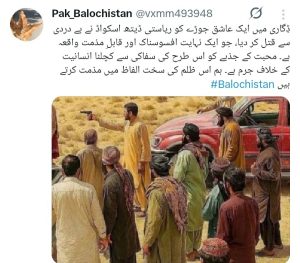
Across the world, fake news has become a weapon not just of confusion, but of control. It creates unrest, weakens institutions, divides communities, and turns people against their own. Sadly, Pakistan is no exception. In Balochistan, where identity and belonging are deeply emotional subjects, misinformation hits harder. A WhatsApp post or tweet can turn into a flashpoint within hours. The recent Degaari incident is a painful example. When a tragic honor killing took place in Degaari near Quetta, social media was flooded with false claims that the girl was killed by state agencies and it was another case of enforced disappearance. Within hours, old videos and unrelated protest images resurfaced. Emotions ran high, distrust spread, and confusion turned into anger. But when the truth emerged that it was a family dispute and an honor related killing it was already too late. The rumor had done its job, fear and resentment had been seeded.
This is how misinformation works quietly, emotionally, and efficiently. It doesn’t need proof it only needs to feel real. In Balochistan, this pattern repeats often. Old videos of blasts resurface as new. Political statements are edited to look anti state. Pictures of missing persons from years ago are reshared to reignite outrage. Each forward may seem small, but together, they create a storm of misunderstanding and mistrust. The process is predictable: – Manipulation, Amplification, Validation, Repetition
The more we hear something even if it’s false the more believable it feels. That’s how perception becomes reality but the solution is simple, pause and verify. Before forwarding anything, check the source. Is it from a verified outlet or just circulating on WhatsApp? Use quick tools like Google Reverse Image Search to check if a video is old or from another country. And if something feels too shocking or emotional that’s your biggest red flag. Even technology tries to warn us. WhatsApp now marks frequently shared messages with a label Forwarded many times It’s not just a tag, it’s a signal. Fake news is not only a digital issue it’s a moral one. Because every lie we forward damages someone’s trust, someone’s reputation, or even someone’s life. The numbers tell the same story , According to the Pew Research Center (2024), 80% of adults in 35 countries believe fake news is a major problem. In Pakistan, a Dawn survey found that 45% of citizens have been misled by fake news at least once. In 2023 alone, Rumor Scanner identified over 1,900 fake stories mostly linked to national security, religion, or provincial politics. So where do we go from here?
By building a new kind of patriotism digital patriotism where truth is treated as a national responsibility.
Don’t argue , educate. Don’t share fast, share right. Don’t just read, verify.
If every citizen simply pledges, I will not spread lies even by mistake, we can defeat misinformation faster than it spreads, because in the end, the real hero on social media is not the one who shares first it’s the one who verifies first. A lie repeated a thousand times remains a lie, But the truth spoken once with courage can live forever.
The author, a Quetta based BUITEMS graduate, takes a deep interest in cyber awareness, socio-political currents, and the transformative developmental landscape of Balochistan.

Cover picture credit: https://www.google.com/imgres?imgurl=https%3A%2F%2Feuvsdisinfo.eu%2Fuploads%2F2020%2F04%2F2.png&tbnid=70SeVJQAltdyxM&vet=1&imgrefurl=https%3A%2F%2Feuvsdisinfo.eu%2Fthink-before-you-share%2F&docid=4-26B4FoZji_uM&w=1024&h=512&source=sh%2Fx%2Fim%2Fm5%2F1&kgs=547fa73fc2edec09&shem=isst