By: Muhammad Ahmed kasi
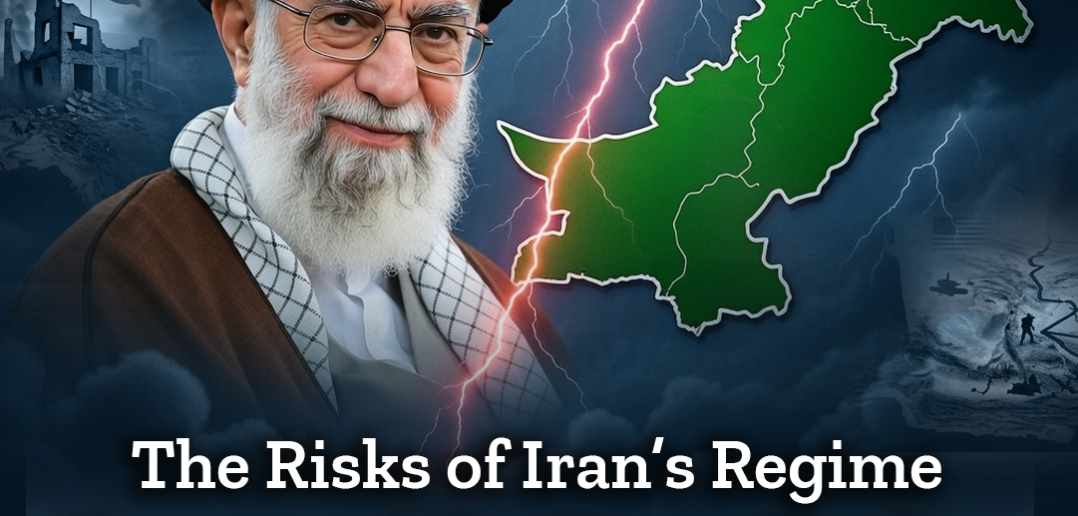
The war involving Israel, the United States, and Iran has pushed the Middle East into a new and dangerous phase. The reported killing of Iran’s Supreme Leader has deeply shaken Iranian society. While many inside Iran mourned his death, others openly celebrated it, revealing how divided the country has become. Iran’s retaliatory strikes on US military bases across the region, including in the United Arab Emirates, Bahrain, and Qatar, further expanded the conflict and raised fears of a wider regional breakdown.
If this war leads to a complete regime change in Iran, the consequences will go far beyond Tehran. A new leadership most likely secular and openly aligned with Western interests would fundamentally reshape Iran’s regional posture. In such a scenario, Reza Pahlavi, the son of the former Shah, is often mentioned as a possible figurehead. His close ties with Israel and acceptance in Western capitals make him a favorable option for those seeking a post-revolution Iran aligned with the West. For Israel, this would be a strategic victory one that fits neatly into its broader vision of reshaping the Middle East.
However, what may appear as a geopolitical gain for Israel and its allies could become a serious challenge for Pakistan. Iran shares a long and sensitive border with Pakistan, particularly with Balochistan, a region already facing security and development challenges. Any shift in Iran’s internal and external policies will directly affect Balochistan’s stability. Pakistan and Iran, despite differences, have historically maintained a working understanding based on shared borders, trade, and security coordination. A pro-Israel, pro-Western Iran would likely reassess this relationship, potentially distancing itself from Pakistan.
This concern is not theoretical. For years, there have been persistent allegations that Baloch militant groups have used Iranian territory as transit routes or safe hideouts. Several reports have claimed that militant leaders found shelter across the border, taking advantage of weak coordination and regional instability. The case of Kulbhushan Jadhav further deepened Pakistan’s concerns. His travel history to Iran, revealed after his arrest, reinforced fears of hostile intelligence networks operating close to Pakistan’s western border. If Israel’s influence increases in Iran after a regime change, it is likely that India’s footprint would also expand, creating new pressure points for Pakistan especially in Balochistan.
An Iran closely aligned with Israel could also translate into a tougher regional posture toward Pakistan. Israel has never been comfortable with Pakistan’s nuclear capability, and Benjamin Netanyahu has repeatedly raised concerns about Pakistan’s nuclear program in public interviews and statements. In a region reshaped by Israeli influence, Pakistan may face increased diplomatic pressure, strategic isolation, and intensified information and proxy warfare.
At the same time, Pakistan’s own foreign policy signals in recent years have appeared inconsistent. Prime Minister Shehbaz Sharif nominated Donald Trump multiple times for the Nobel Peace Prize, portraying him as a force for global stability. Yet the same leader presided over direct military actions against Iran at the end of 2025 and again in February 2026. Trump’s record shows a pattern of military interventions rather than restraint. This contradiction raises uncomfortable questions about Pakistan’s diplomatic messaging and the clarity of its foreign policy at a time when regional coherence is most needed.
These developments also intersect with Pakistan’s tense western front. Recent clashes and instability along the Pakistan, Afghanistan border already stretch Pakistan’s security capacity. If Iran’s border becomes less cooperative or openly hostile Pakistan could face pressure from both the west and southwest simultaneously. This would complicate counterterrorism operations, border management, and regional trade, while giving militant groups more operational space.For Pakistan, the real danger lies not only in immediate military threats but in long-term instability. A hostile or indifferent Iran could weaken border coordination, disrupt economic ties, and allow external actors to exploit Balochistan’s vulnerabilities. This would directly affect Pakistan’s internal security and undermine efforts to bring lasting peace and development to the province.
In this changing landscape, Pakistan must adopt a clear-eyed and proactive approach. Diplomatic engagement with Iran regardless of who comes to power should remain a priority. At the same time, Pakistan must strengthen border security, counter-intelligence capabilities, and regional partnerships to ensure Balochistan does not become a battleground for foreign agendas. The region is entering an era of sharp realignments, and Pakistan cannot afford confusion or hesitation.
The future of Iran will shape the future of the region. For Pakistan especially for Balochistan the stakes are too high to ignore. What happens in Tehran tomorrow may well determine stability or turmoil along Pakistan’s western frontier for years to come.
The author, a Quetta-based researcher and journalist affiliated with Voice of Balochistan, takes a deep interest in peace narratives, digital media, and the socio-political transformation of Balochistan.