By: Hamza Shahzad
For decades, Balochistan has suffered from underdevelopment and political neglect. But if we are to have an honest conversation about radicalization in the province, we must confront an uncomfortable truth: separatist groups have turned legitimate grievances into tools for recruitment, manipulating young men like Zubair Baloch, Sufian Kurd, Shahdad and Ehsan Baloch into pawns for their violent agendas.
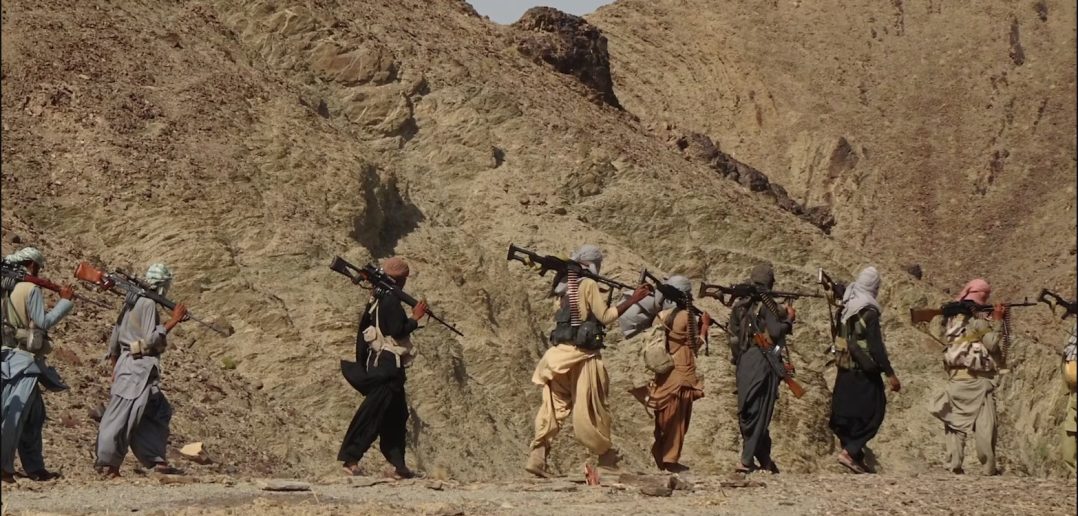
Recently, Zubair Baloch, an advocate by profession and former chairman of BSO (Pajjar), the student wing of the National Party, was killed during an intelligence-based operation in Dalbandin. Later, he was claimed as a member of the pro-Balochistan independence movement, the Baloch National Movement (BNM), by its chairman Naseem Baloch on X (formerly Twitter). BNM is a banned organization in Pakistan due to its separatist ideology and is widely regarded as the political front of the proscribed Balochistan Liberation Front (BLF), led by Dr. Allah Nazar.
Zubair’s story is not merely one of ideology, it is a tale of exploitation. Young, ambitious, yet disillusioned by limited opportunities, he became an easy prey for militant propaganda. Separatist leaders do not provide genuine empowerment to the youth; instead, they ensnare them in a cycle of victimhood. They glorify violence as “resistance,” misleading students into believing that carrying a gun is more honorable than carrying a book.
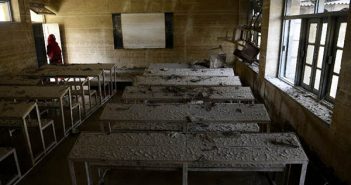
In reality, the same groups that claim to fight for Baloch rights are the biggest obstacle to those rights. They destroy schools, threaten teachers, and silence moderate voices. They thrive on chaos because stability would expose their irrelevance. Zubair’s radicalization reflects how these groups deliberately prey on the vulnerable, turning disillusioned students into disposable fighters.
The Separatist propaganda paints militants as heroes and martyrs. But what is the reality? Families torn apart, villages under siege, and an entire province held hostage by fear. The so-called liberation leaders live abroad, enjoying luxury and lobbying in Western capitals, while young men like Zubair, Sufyan or shahdad are left to face bullets in the mountains. This hypocrisy is rarely discussed, yet it is central to why radicalization persists.
There is no doubt that Balochistan faces undeniable structural problems, unemployment, poor governance, lack of infrastructure. But exploiting these issues for violence is no solution. Instead of addressing deprivation, separatist groups deepen it. By discouraging education and development, they ensure that new generations remain trapped in the same cycle of hopelessness that produced terrorists like Zubair.
The cost is enormous. Every youth who falls prey to militant propaganda is not just a statistic, but a wasted life that could have contributed to the progress of the province. The tragedy of this so-called “war of independence” is that countless young men who might have become scholars, reformers, or political leaders, like many of their predecessors who transformed student activism into constructive politics, are instead reduced to casualties of separatist manipulation.
If Balochistan is to move forward, its youth must be given an alternative vision, one that values peace, education, and opportunity over empty slogans and guns. Civil society, political leaders, and the state must work together to expose the lies separatist groups tell and to offer young people tangible hope.
Zubair’s case, and others like it, should not be romanticized. It must be recognized for what it truly is: a stark warning of how separatist groups exploit the frustrations of youth to advance their own self-serving agendas. The real struggle for Balochistan does not lie in the mountains with guns, but in classrooms, workplaces, and community halls. Unless the exploitation of young people by militant networks is confronted and dismantled, the cycle of loss will persist. And with every Baloch youth who is lost, it is not only a family that mourns, it is the entire province that is robbed of its future.
About the Author:
The author is a Quetta-based COMSATS graduate with a strong interest in current affairs, and the political and developmental landscape of Balochistan.