By Arooba Shehzad
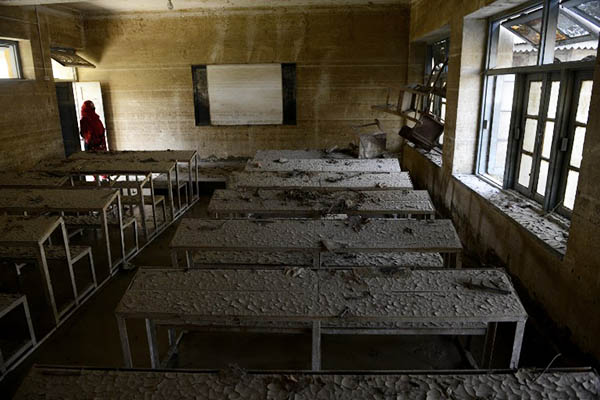
Nelson Mandela was never wrong when he said “Education is the most powerful weapon which you can use to change the world. But in rural Balochistan, that weapon remains locked behind the gates of ghost schools. In Balochistan, education is not merely a sector in crisis, it is a system struggling to survive. With more than three million children out of school, the province accounts for the largest share of Pakistan’s out-of-school population. In the midst of this uncertainty the most troubling aspect is the existence of “Ghost schools” in rural areas of Balochistan. Ghost school term as a school that exists on government records but does not actually function in reality. Although they are recorded in government data and budgets are allocated for them, these schools are either closed, lack teachers, or have no students attending them. Ghost school are often the result of weak Governance, bad admirative, corruption, lack of monitoring and A major shock in Balochistan’s education is the rise of “ghost teachers”, teachers assigned by government. Out of 59,000 registered teachers, around 15,000 draw salaries without ever showing up. This wastes nearly Rs 400–500 million annually and robs thousands of children of learning. Suspending salaries is not enough without proper oversight, ghost teachers will keep undermining the province’s future.
Balochistan’s education system has been in crisis for years, and recent reports show literacy and enrollment rates at alarmingly low levels. The province has the lowest literacy rate in Pakistan at 43.6 percent, with female literacy just 28 percent. Primary school enrollment is weak, only 58 percent of children aged 5 to 9 attend, dropping to 32 percent in rural areas. Poverty, weak governance, and poor planning make matters worse. Many schools lack basic facilities like classrooms, furniture, clean water, and toilets, forcing children to learn in overcrowded, poorly maintained environments, which hurts both learning and retention. According to Provincial Minister for Education, Rahila Durrani, at a recent event inaugurating the government’s school enrollment campaign, approximately 290,000 children remain out of school in Balochistan. She added that 230,000 children were newly enrolled last year, a positive step that reflects efforts to improve access. However, these figures must be seen in context. Despite these gains, Balochistan continues to face a severe education crisis, with reports indicating that over 3 million children in the province remain out of school, making it one of the most educationally deprived regions in Pakistan. The challenge goes beyond enrollment ensuring quality education, functioning schools, and opportunities for girls remain urgent priorities.

When compared with this large number, the enrollment of 230,000 children represents only a small portion of the overall problem. Another critical issue is whether these enrollments will translate into long-term attendance and learning. In many areas of Balochistan has schools lack buildings or basic facilities, there is a shortage of trained teachers, and many schools have historically been non-functional or “ghost schools. “Without addressing these structural problems, enrollment numbers alone may not guarantee quality education or continued attendance and there are more than 3000 ghost schools in different districts of Balochistan, a report shows that a case study of ghost school in Balochistan. Education in Sui faces multiple, intertwined challenges that hinder the growth and development of its young generation. Schools struggle with poor infrastructure, lacking proper classrooms, clean drinking water, electricity, washrooms, and basic learning materials, creating an environment where students find it hard to focus and thrive. Security concerns, including frequent violence and tribal conflicts, have forced many schools to close and left parents hesitant to send their children to study. Adding to these challenges, gender inequality continues to limit girls’ access to education, as cultural barriers and safety fears prevent them from attending school. Together, these issues paint a stark picture of an education system in urgent need of attention and reform. Research also shows the view point of a parent saying “Our children are not being properly educated in the schools owing to ghost teachers, and no one takes notice of this painful situation. Only 3 or 5 teachers are present in schools out which badly affects the literacy and quality of education in this city” and the results of Ghost school in Sui,Balochistan shows that bad governance, weak administration, lack of infrastructure which also make it way to bad governance again, gender disparity, cultural and language barrier, ongoing security situation make quality education in Sui is a challenging task particularly in the rural setting of the province.
Another report conducted in 2021 showed that, With almost 70% of children not attending school, Balochistan is the province with the largest percentage of Pakistan’s 22.8 million out-of-school children due to a serious education crisis. Approximately 61% of children in Pishin between the ages of 6 and 15 do not attend school; dropout rates increase to 81% at middle school and 87% at secondary school. Girls are disproportionately affected; at the primary level, 55% of girls are not attending school, and at the secondary level, that number rises to 80%. Similar issues are present in other districts: approximately 65% of children in Killa Abdullah, 58% of children in Kalat, and 57% of children in Quetta between the ages of 6 and 15 are not enrolled in school. Many schools in these districts lack electricity, restrooms, boundary walls, and drinking water, and girls find it especially challenging to get to school due to the dispersed rural population and long commutes.
For girls in particular, Balochistan’s education crisis is devastating. There is a serious dropout issue in districts like Pishin, where 55% of girls between the ages of 6 and 15 do not attend school. This number rises to 73% between the ages of 11 and 13 and 80% between the ages of 14 and 15. Girls consistently make up the majority of out-of-school children in Killa Abdullah, Kalat, and Quetta due to obstacles like early marriage, safety concerns, a shortage of female teachers, and the distance to schools. Girls are further deterred from attending by inadequate school facilities and cultural barrier. More than just a statistic, Balochistan’s education crisis represents a lost generation.
However, the education crisis in Balochistan is more than a statistic, it is a lost generation, the fact that ghost schools still exist in the rural areas of Balochistan indicates the poor governance situation. In the rural areas, thousands of children are not in school, while existing schools either lack of teachers or are not functioning at all. This means that the schools have become ghost schools. In the rural areas, the number of learning opportunities is already low, and the existence of ghost schools makes the situation worse. Therefore, the solution to the crisis is not building schools but rather the commitment to the proper functioning of the schools and to address the crisis, schools in rural Balochistan must not only function properly but also provide quality education that encourages students to learn actively and think critically.