By: Ahmed kasi
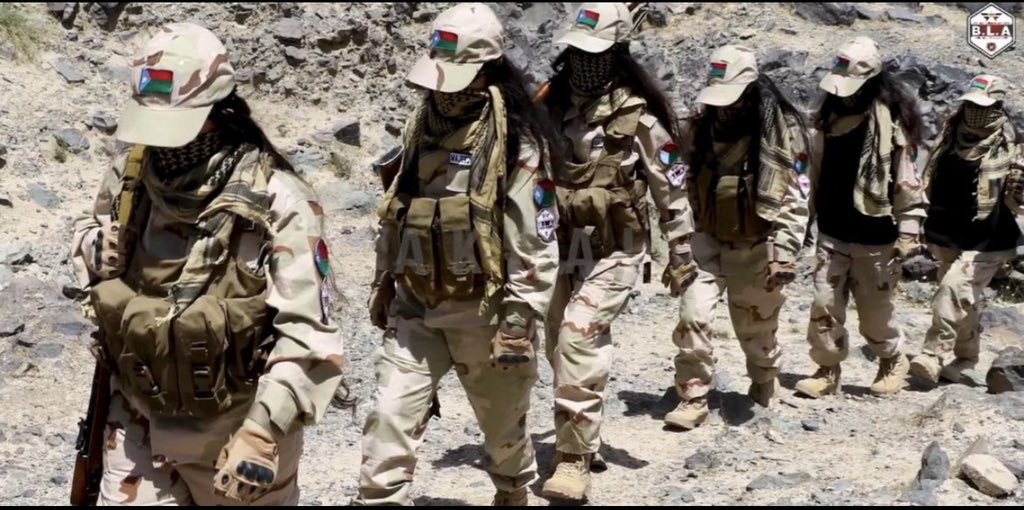
In recent years, a disturbing trend has emerged in Balochistan’s insurgency: the recruitment and use of young, educated women as suicide bombers. This tactic is not only a direct attack on innocent lives, but also a deep assault on Baloch cultural values, Islamic teachings, and the dignity of women in society.
The most shocking case appeared on April 26, 2022, when Shari Baloch, also known as “Bramsh,” carried out a suicide attack outside the Confucius Institute at the University of Karachi. Three Chinese teachers and a Pakistani driver were killed, and four others were injured. She was 30 years old, a mother of two, and a public school teacher with a Master’s degree in Education. For the first time, the Balochistan Liberation Army (BLA) used a female suicide bomber in Pakistan. Her recorded message, released by BLA’s media wing, called for action instead of dialogue, and her husband was later arrested after the attack.
Just over a year later, on June 27, 2023, Sumaiya Qalandrani carried out another suicide bombing in Turbat, targeting a convoy of senior Pakistani military officials. One soldier was killed and four were injured. Sumaiya was only 25 years old and a Computer Science student. She worked with BLA’s media wing and was engaged to the son of Aslam Baloch, founder of the Majeed Brigade In her statement, she promised that her act would “inspire other women.” This reveals how emotional manipulation and personal trauma are weaponized to draw young women into violence.
The trend worsened with the August 26, 2024 suicide attack by Mahal Baloch, known as “Zilan Kurd,” on a Forward Operating Base in Bela, Lasbela district. The attack was part of BLA’s larger “Operation Herof,” which, according to Pakistani officials, resulted in over 73 security personnel killed and dozens injured. Mahal was a seventh-semester Law student, and had even completed internships in Quetta. She joined the BLA in 2022 and later entered its elite Majeed Brigade. Her pre-recorded video message praised armed resistance, and her ability to drive, a rare skill for women in that area, raised suspicion on her way to the target.
These cases share common elements: educated young women, enrolled in universities and colleges, recruited emotionally through propaganda, influenced by trauma, and driven by glorified stories of martyrdom. But one major reason behind this rising trend is the impact of 5th generation media warfare, where social media platforms, propaganda channels, and digital narratives are being used to radicalize youth. Online spaces have become breeding grounds for disinformation and emotional manipulation, where militants spread false heroism and anti-state narratives. The media has played a crucial role in shaping sympathy for these groups by amplifying selective stories and glorifying violence under the disguise of resistance.
This digital propaganda finds support within certain student circles and organizations like the Baloch Students Organization (BSO), which once represented student rights but have now, in many cases, turned into platforms promoting divisive and anti-state sentiments. Instead of guiding students toward education and progress, such groups have dented the reputation of Baloch youth by indirectly justifying militancy and feeding the very narratives that fuel conflict. When identity, grievance, and propaganda mix, recruiters find fertile ground on university campuses.
This development represents a direct attack on Baloch culture. Traditionally, Baloch women are symbols of dignity, protection, and honor. Turning daughters into tools of destruction is not heroism. It is exploitation. Tribal and family values completely reject the idea of women being used this way. Furthermore, suicide and the killing of innocents are strictly forbidden in Islam. The manipulation of religion to justify violent acts is both dishonest and dangerous. No faith encourages a mother to orphan her children for political violence.
The rise of female suicide bombers should serve as a national alarm bell. It challenges our moral fabric, cultural identity, and religious values. If ignored, other militant groups may adopt the same strategy, leading to an even more dangerous future. Protecting young women from radicalization requires collective effort. Universities must improve counseling systems to support vulnerable students. Communities, journalists, and religious scholars must counter extremist narratives. Families impacted by conflict need more institutional support so that trauma does not push youth toward violence. Cultural revival programs can remind the younger generation of positive heritage and identity.
Behind every female suicide bomber, there are devastated parents, orphaned children, damaged reputations, and broken communities. These women are not symbols of bravery; they are victims of manipulation, propaganda and radicalization. The future of Balochistan depends on knowledge, peace, and opportunity, not violence carried out by daughters who deserved better.
The author, a Quetta-based researcher and journalist affiliated with Voice of Balochistan, takes a deep interest in peace narratives, digital media, and the socio-political transformation of Balochistan.

Image credits: Google